
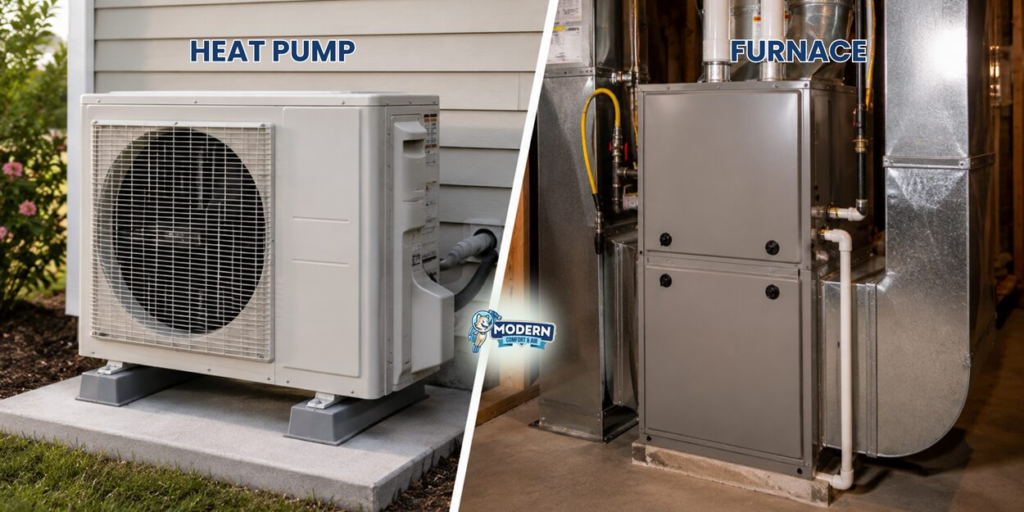
When it’s time to replace a heating system, many homeowners find themselves comparing a heat pump and a furnace. At first glance, both do the same job: keeping your home warm during colder months. The debate usually comes down to a direct comparison: heat pump vs. furnace. While both systems deliver warm air, they use entirely different operational methods to achieve that goal.
Heat Pump vs Furnace: How Do They Work?
A traditional furnace generates original heat by burning fuel, such as natural gas or propane, or by using electric heating elements. Conversely, a heat pump does not create heat. Instead, it absorbs ambient thermal energy from the outdoor air and transfers it indoors using a refrigerant cycle. Because it moves heat rather than generating it, a heat pump can operate at over 300 percent efficiency in mild weather, whereas a high-efficiency gas furnace tops out around 98 percent.
When weighing a heat pump vs. a gas furnace, geography dictates the winner. Gas furnaces deliver intense, high-temperature heat that easily overcomes freezing winter spells. Heat pumps operate more gradually, providing a consistent stream of moderately warm air.
Real-World Performance Under Pressure
Homeowners transitioning to electric heating often look at their initial monthly statements and ask: Why is my heating bill so high with a heat pump? The answer usually lies in auxiliary heat usage. When outdoor temperatures plummet below freezing, standard heat pumps struggle to extract enough ambient warmth. To compensate, the system activates its backup electric resistance heat strips. These heat strips consume massive amounts of electricity, causing utility costs to spike if the system is sized incorrectly or lacks an inverter-driven compressor.
This operational style also changes how you run your thermostat. Many homeowners wonder: Is it okay for a heat pump to run all night in winter? Yes, it is actually designed to do exactly that. Unlike a furnace that cycles on and off rapidly, a heat pump runs for long, continuous periods to maintain a stable indoor climate efficiently.
Can a Heat Pump Replace a Furnace?Â
If you currently have a traditional setup, you might wonder if a heat pump can replace a furnace. Well, the answer is yes. Modern cold-climate heat pumps can handle standalone heating duties in many regions, or they can be paired with an existing furnace to create a dual-fuel system that optimizes energy usage based on outdoor temperatures.
When Should a Furnace Be Replaced?
If you’re asking, “Is a 25-Year-Old Furnace Still Good?”, the answer is usually no. While some older units continue to operate, they are often far less efficient, more expensive to repair, and closer to failure than newer systems.
Wrapping Up
So, what is better, a heat Pump or a furnace? The ideal choice depends on local fuel costs, winter climate severity, and your existing ductwork setup. To find the right balance of technology for your home, contact Modern Comfort and Air for professional heat pump services in Jurupa Valley, CA, and get the best guidance according to your home.
