
A reliable heating and cooling system is essential for comfortable living in Southern California. Summers can be intensely hot, and winters still require dependable heating. When your HVAC system stops working the way it should, it affects your comfort, energy bills, and even indoor air quality.
That’s why homeowners often search for HVAC repair in Rancho Cucamonga when their system starts acting up. Understanding the most common HVAC problems can help you identify issues early and know when to call professionals for help.
This guide explains common heating and cooling system issues, what causes them, and how experienced technicians solve them. Whether it’s cooling problems, heating failures, or airflow issues, knowing the basics helps you protect your home’s comfort.
Common Challenges for HVAC Rancho Cucamonga Systems
Rancho Cucamonga’s geography plays a significant role in HVAC longevity. The proximity to the Cajon Pass means your outdoor condenser unit is constantly pelted with fine dust, debris, and high-velocity winds. These environmental factors lead to specific mechanical stresses that require specialized knowledge to address.
High-Heat Component Stress
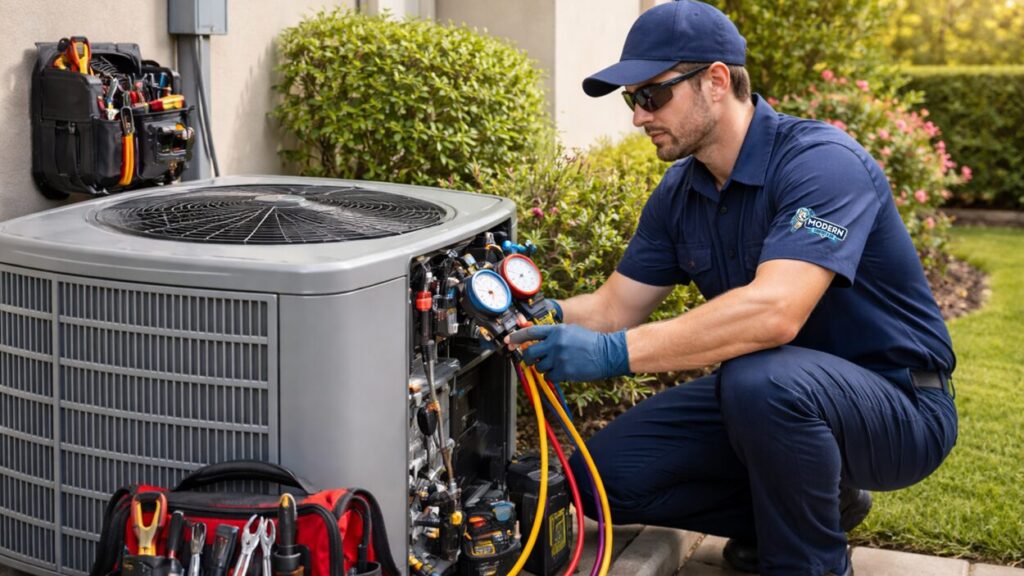
When the heat peaks, the most common complaint that air conditioning repair in Rancho Cucamonga receives involves a frozen evaporator coil or a system that blows warm air.
- Refrigerant Leaks: Many homeowners believe refrigerant is like gas in a car and that it runs out. But this is a myth. An HVAC system is a closed loop. If the refrigerant is low, you have a leak. Professionals use electronic leak detectors to find the breach, seal it, and recharge the system to factory specifications.
- Capacitor Failures: The capacitors act like high-voltage batteries to kickstart your compressor. In extreme heat, these components are prone to bulging and leaking. A failed capacitor is often the culprit when you hear your outdoor unit humming, but the fan isn’t spinning.
Furnace Issues
While we are known for our sun, the desert-fringe climate of Rancho Cucamonga means winter nights require a reliable heater. Furnace repair calls often peak in November.
- Ignition Problems: If your furnace clicks but won’t catch fire, the flame sensor or hot surface igniter is likely coated in carbon or cracked.
- Heat Exchanger Integrity: This is a critical safety issue. A cracked heat exchanger can leak carbon monoxide into your home. Experts use specialized borescopes to inspect the metal for microscopic fractures that occur over years of expansion and contraction.
Why Local Expertise Matters?
Choosing a generic contractor versus a specialist familiar with HVAC in Rancho Cucamonga specificities is a choice between a temporary patch and a long-term solution. Local experts understand the microclimates of the city.
The Diagnostic Process
The approach to diagnostics ensures you aren’t paying for parts you don’t need. A professional inspection includes:
- Static Pressure Testing: Checking if your ductwork is sized correctly for the blower motor.
- Amp Draw Measurement: Testing motors to see if they are pulling more electricity than they are rated for, which indicates an impending failure.
- Delta T Calculation: Measuring the temperature difference between the return air and the supply air to ensure the heat exchange process is efficient.
Modern Installation Solutions For Replacement
Sometimes, a system is simply aged out. If your unit uses R-22 Freon (which is phased out and extremely expensive) or has a SEER rating below 14, a local air conditioning Installation is often more financially sound than repeated repairs.
Ductless Technology
For older homes where extending ductwork is impossible, Ductless heating installation has become the gold standard. These mini-split systems allow for:
- Zoned Comfort: Heat or cool only the rooms you are using.
- Hyper-Efficiency: Since there are no ducts, you lose 0% of your treated air to leaks in the attic.
- Quiet Operation: These units are significantly quieter than traditional central air systems.
How to Deal with HVAC Emergencies?
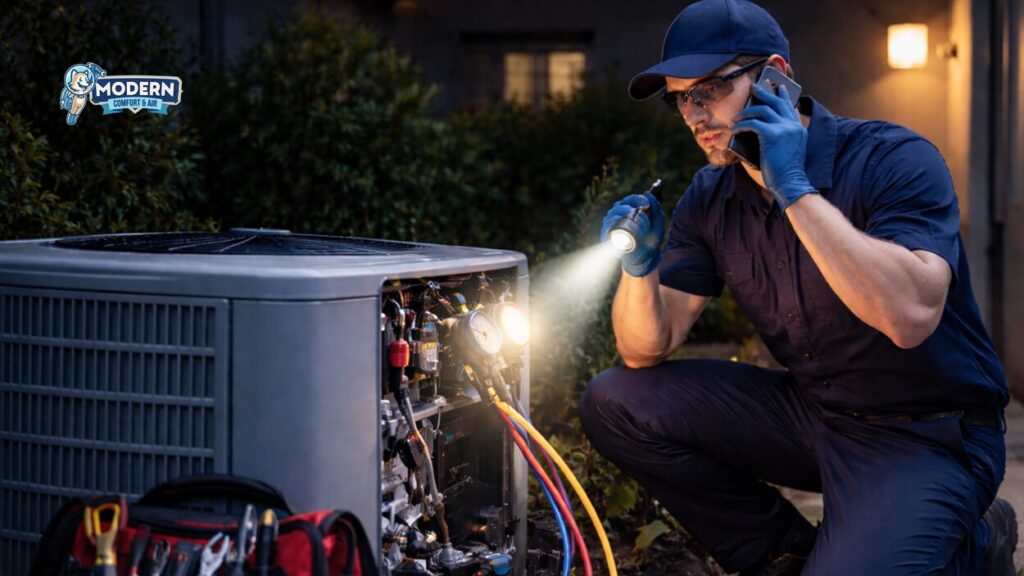
Here’s what qualifies as an HVAC emergency:
- Total System Failure in Extreme Temperatures: If you have infants or elderly residents in the home during a triple-digit heatwave, a broken AC is a medical emergency.
- The Smell of Burning Plastic: This indicates electrical melting or a motor winding failure.
- Gas Smells: If your furnace emits a sulfur-like rotten egg smell, shut off the gas main immediately and call for professional help.
Experiencing an HVAC emergency right now? Don’t wait – call Modern Comfort and Air at (909) 489-4018 for 24/7 emergency service in Rancho Cucamonga.
Proactive vs. Reactive HVAC Maintenance
The truth about HVAC is that 90% of mechanical failures are preventable. A system that is cleaned and calibrated annually will outlast a neglected system by five to seven years.
Annual maintenance checklist for Rancho Cucamonga homeowners:
- Condenser Coil Cleaning: Removing the caked-on dirt that prevents heat transfer.
- Drain Line Clearing: Algae buildup in the condensate line is the number one cause of water damage in Rancho Cucamonga attics and closets.
- Electrical Tightening: High winds and vibrations can loosen electrical connections over time, leading to arcing and fire hazards.
Technical Accuracy in System Sizing
One of the biggest mistakes in air conditioning installation is oversizing. A common misconception is that a bigger unit will cool the house faster. In reality, an oversized unit has short cycles, meaning it turns on and off too quickly. This prevents the system from dehumidifying the air, leaving your home feeling cold but clammy, and leads to premature compressor failure.
Experts use a Manual J load calculation to determine the exact thermal units required for your specific square footage, window orientation, and insulation levels.
Frequently Asked Questions
How much does HVAC repair cost in Rancho Cucamonga?
Costs vary depending on the issue – a minor fix like a capacitor replacement may cost far less than a refrigerant leak repair or major component replacement. We provide upfront, transparent pricing after a full diagnostic, with no hidden charges.
How often should I service my AC?
We recommend professional maintenance at least once a year, ideally before the summer heat sets in. Regular tune-ups catch small issues before they become expensive repairs and can extend your system’s lifespan by 5-7 years.
How do I know if I need a repair or a full replacement?
If your unit is over 10-12 years old, uses R-22 refrigerant, or you’re facing repeated breakdowns, replacement is often more cost-effective than continued repairs. Our technicians can give you an honest recommendation during inspection.
Do you offer emergency HVAC repair in Rancho Cucamonga?
Yes, we provide 24/7 emergency service for total system failures, gas smells, or burning odors. Call us immediately if you notice any of these warning signs.
What causes an AC to blow warm air?
The most common causes are low refrigerant (indicating a leak), a failed capacitor, or a dirty condenser coil. Our diagnostic process quickly identifies the exact cause, so you’re not paying for unnecessary parts.
Conclusion: Ensure Your Home’s Longevity with Modern Comfort and Air!
The technical complexity of modern climate control systems requires a blend of electrical knowledge, chemistry (refrigerant handling), and mechanical engineering. Attempting DIY fixes on these high-voltage systems often leads to further damage or personal injury. By understanding the common points of failure, you can make informed decisions when it comes time to call in the professionals.
For those residing in the Inland Empire, the demands on your equipment are relentless. Ensuring your system is handled by experts who understand the local environmental pressures is the only way to guarantee year-round comfort and safety.
If you are currently experiencing a system failure or are looking to upgrade to a more efficient climate solution, Modern Comfort and Air, Inc. provides the expert diagnostics, installation, and maintenance required to keep your Rancho Cucamonga home at the perfect temperature regardless of what it’s doing outside.
