
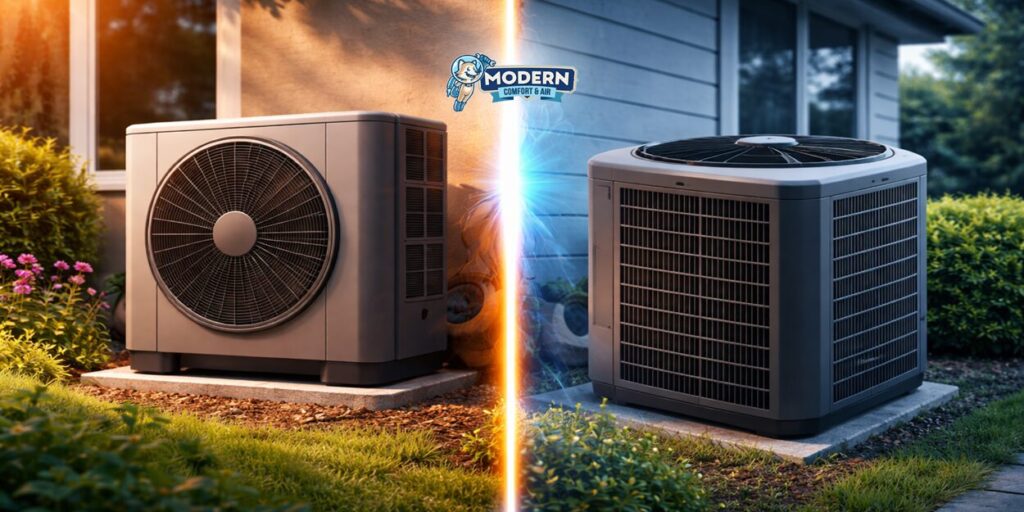
Is your AC unit currently making a sound like a blender full of rocks? Or maybe you’re just tired of opening your utility bill and feeling like you’re paying for a small country’s power grid.
Most homeowners hit a wall when their old system dies: Do you just stick with the standard central AC, or do you finally switch to a heat pump? You’ve probably heard the hype, but you’ve also heard the horror stories about them not working in the cold or costing a fortune to install.
Whether you’re dealing with uneven temperatures in your house or rising prices, there is a clear better choice for your specific home. This is how you make that decision without getting ripped off. Keep reading.
What is a Heat Pump and How Does It Differ From Central AC?
To decide which is better, you must first understand the fundamental engineering differences. Most people view an air conditioner as a machine that creates cold air. In reality, both central AC units and heat pumps are energy movers, not energy creators.
What is a Heat Pump?
At its core, a heat pump is a bidirectional refrigeration system. While a standard central AC can only move heat from inside your home to the outdoors, a heat pump is equipped with a reversing valve. This allows the system to change the flow of refrigerant, enabling it to extract heat from the outside air, even in cold temperatures, and pump it into your home.
What Does a Heat Pump Do?
In the summer, it functions identically to a central air conditioner. It pulls heat out of your indoor air and dumps it outside. In the winter, it reverses the process. Because it is moving heat rather than generating it through combustion (like a gas furnace) or electric resistance, it is often significantly more efficient than traditional heating methods.
Comparing Heat Pump vs. Central AC Performance in Different Climates
The heat pump vs. central AC debate is largely dictated by geography. Central AC systems are almost always paired with a furnace (usually gas or propane). This dual-fuel or split setup is the traditional powerhouse for regions with sub-zero winters.
Heat pumps have historically struggled in extreme cold. As the outdoor temperature drops, there is less ambient heat to extract. However, modern cold-climate heat pumps have closed this gap significantly, maintaining high efficiency down to 5°F and even lower. If you live in a Mediterranean climate or a region with mild winters, a heat pump is mathematically superior in terms of efficiency.
However, if you live in a region where the ground stays frozen for four months, a central AC paired with a high-efficiency gas furnace remains the better choice for raw heating power.
Heat Pump Installation Cost vs. Central Air Replacement Prices
When evaluating the cost, you cannot look only at the sticker price of the unit. You must consider the total infrastructure requirements.
Heat Pump Installation Cost
A heat pump is generally more expensive to buy than a standalone AC unit because it’s a more complex machine. A typical heat pump installation cost can range from $5,000 to $12,000, depending on the efficiency rating (SEER2).
However, you must remember that a heat pump replaces both your AC and your furnace. When you compare the price of a heat pump against the combined cost of a new furnace and a new AC, the heat pump often emerges as the more economical single-purchase solution.
How Expensive is it to Install Central Air?
If you already have a functioning furnace and just need to swap the cooling unit, a central air installation is usually the cheaper upfront path, typically falling between $3,500 and $7,500. However, you are stuck with your gas company. If gas prices spike, your heating bill spikes. A heat pump lets you go all-electric, which is a massive win if you have solar panels.
How to Install a Heat Pump: Why Professional Setup Matters
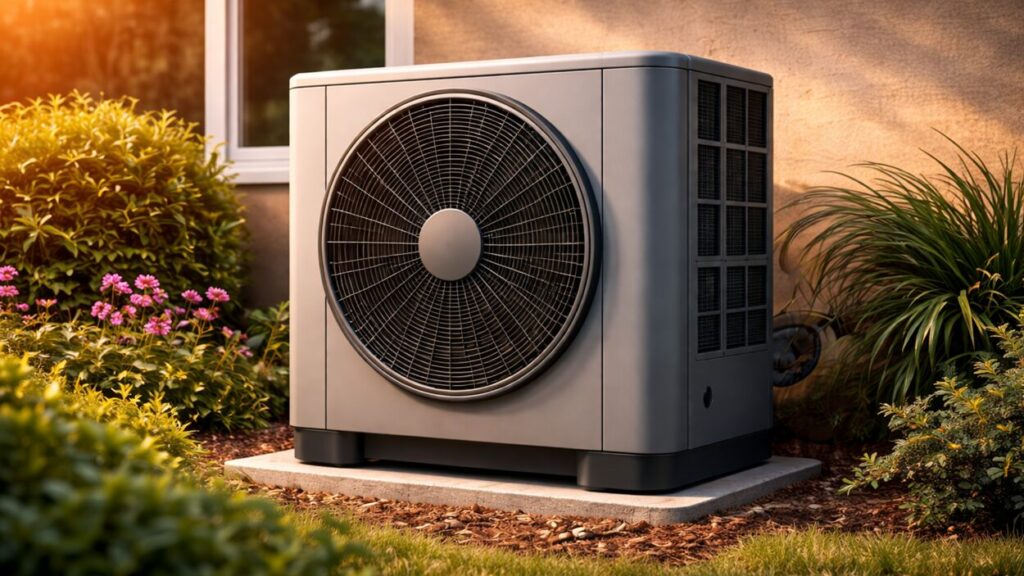
The biggest reason heat pumps get a bad reputation is poor installation. This isn’t a DIY project or something you trust to a handyman.
Installation of a heat pump correctly requires a “Manual J” load calculation. This is a technical assessment of your windows, insulation, and square footage to ensure the unit is perfectly sized. If it’s too big, it will short-cycle and die years before its time. If it’s too small, it will run forever, skyrocketing your bill while your house stays lukewarm.
During a professional heat pump installation, the refrigerant lines must be vacuum-sealed to precise levels to prevent moisture from killing the compressor. Additionally, the outdoor unit needs to be elevated on a sturdy pad to allow the defrost cycle to drain properly in the winter.
Longevity: How Long Will Your HVAC System Last?
Because a heat pump works twelve months a year, it naturally accumulates more miles than a central AC unit that rests during the winter. A well-maintained central AC can last 15 to 20 years, whereas a heat pump typically lasts 12 to 15 years.
To maximize the lifespan of a heat pump, biannual professional maintenance is non-negotiable. You are asking one machine to do the work of two. If the reversing valve fails or the coil becomes excessively dirty, the efficiency drops off, and you lose both your cooling and your heating.
Efficiency Ratings: Understanding SEER2 and HSPF2
When considering installation, you’ll see two main numbers: SEER2 (Seasonal Energy Efficiency Ratio) and HSPF2 (Heating Seasonal Performance Factor).
The higher these numbers, the lower your bills. The government is currently offering massive incentives for high-efficiency systems. Through federal tax credits and local rebates, you can often get thousands of dollars back for choosing a heat pump. These incentives often make a high-end heat pump cost the same as a mid-range central AC after the rebates are applied.
Bottom Line: Which is Better?
The better system is the one that matches your local climate and your long-term energy goals. A heat pump is the future of HVAC technology, providing a sophisticated, all-electric solution that handles the heat of summer and the chill of winter with a single footprint. However, it requires a higher level of technical expertise to install and maintain correctly.
For homeowners in the Inland Empire seeking specialized expertise, Modern Comfort and Air provides comprehensive heat pump services in Jurupa Valley, CA, ensuring your system is sized, installed, and maintained for peak performance in our unique Southern California climate.
