
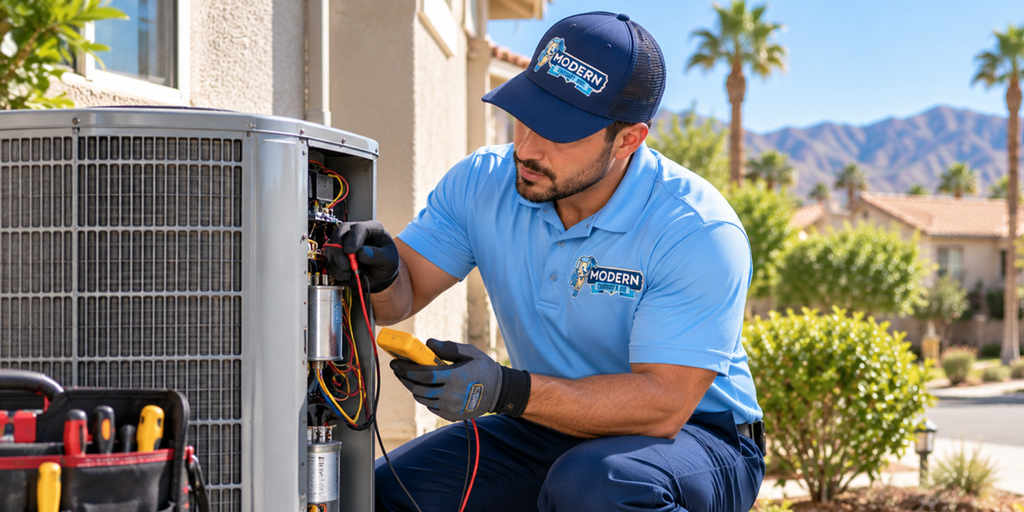
When an HVAC system stops cooling or heating properly, the problem is often caused by a relatively small component rather than a complete system failure. Among the repairs technicians commonly encounter, capacitor problems, refrigerant issues, clogged drains, airflow restrictions, and electrical faults are frequent causes of HVAC trouble.
In a hot climate like Jurupa Valley, an air conditioner can run for long periods during summer, which puts additional demand on components that control the compressor, fan, and airflow.
Which HVAC Problems Do Technicians See Most Often?
A failed capacitor is one of the most common AC repair issues. Capacitors help start and run the compressor and fan motors. When one fails, the system may hum, struggle to start, blow warm air, or stop working altogether.
Capacitors tend to fail more often than other components because they are especially sensitive to heat and age. Riverside County’s long, hot summers mean the outdoor unit’s capacitor is regularly exposed to high ambient temperatures, which gradually degrades it over several years. Power surges, general wear, and running the system for extended hours during peak summer heat can also shorten a capacitor’s lifespan.
Other frequent problems include:
- Low or Leaking Refrigerant: A properly operating AC should not regularly need refrigerant added. If the charge is low, there may be a leak that needs to be located and repaired.
- Clogged Condensate Drains: Air conditioners remove moisture from indoor air. That water needs somewhere to go. A blocked drain can cause water to back up and may shut the system down.
- Dirty Filters and Restricted Airflow: A severely clogged filter can reduce airflow, make the system work harder, and contribute to poor cooling or even coil icing.
- Electrical Problems: Failed contactors, wiring faults, blown fuses, and control issues can prevent the system from operating.
- Motor Problems: Blower or condenser fan motors can wear out, causing weak airflow, overheating, or a system that will not run.
These issues are consistent with common HVAC failure patterns, but the symptom alone does not identify the failed component. For example, an AC that is blowing warm air could have a capacitor problem, refrigerant issue, airflow restriction, electrical fault, or another underlying defect.
Common Furnace and Heating Repairs
Most homeowners think of AC repairs first, but Jurupa Valley furnaces see their own set of recurring issues, particularly once winter use begins after months of sitting idle:
- Faulty Ignitors or Pilot Lights: A furnace that won’t start heating is often caused by a worn ignitor or a pilot light that won’t stay lit.
- Malfunctioning Thermocouples: This safety device shuts off gas flow if the pilot light goes out; a failed one can prevent the furnace from running at all.
- Cracked Heat Exchangers: A more serious issue that can affect both efficiency and indoor air safety, typically found in older furnaces.
- Blower Motor Issues: The same blower motor used for cooling handles heating airflow too, so problems here affect both seasons.
- Dirty Flame Sensors: A buildup of residue on the flame sensor can cause a furnace to shut off shortly after starting.
What Does a Typical HVAC Repair Cost in Jurupa Valley?
Repair costs vary by the specific component and system size, but homeowners can generally expect these rough ranges:
| Repair | Typical Cost Range* |
|---|---|
| Capacitor replacement | $150 – $450 |
| Refrigerant leak repair + recharge | $250 – $1,500+ |
| Condensate drain clearing | $100 – $300 |
| Contactor or electrical component repair | $150 – $500 |
| Blower or condenser motor replacement | $400 – $1,800 |
| Ignitor or thermocouple replacement (furnace) | $150 – $450 |
| Diagnostic/service call fee | $75 – $200 (often credited toward the repair if you proceed) |
*Figures are general estimates for planning purposes only; get a written quote from a licensed local contractor for an accurate price based on your system and the specific issue found.
What Happens During a Diagnostic Visit?
A technician will typically check refrigerant charge and pressures, inspect electrical components (capacitors, contactors, wiring), test the compressor and fan motors, examine the condensate drain and filter, and review airflow through the ductwork. Most diagnostic visits take 30–90 minutes, after which the technician should explain what they found, what repair options exist, and provide a written estimate before any repair work begins.
Preventing These Repairs
Several of the most common issues on this list are, at least in part, preventable with regular maintenance:
- Changing filters on a regular schedule reduces strain on airflow and helps prevent coil freezing.
- An annual professional tune-up can catch a weakening capacitor or a developing refrigerant leak before it causes a breakdown.
- Keeping the outdoor condenser unit clear of debris and vegetation helps it run cooler, which reduces stress on the capacitor and compressor.
- Flushing the condensate drain line periodically helps prevent clogs and water backup, especially during humid stretches.
A routine maintenance plan won’t eliminate every repair, but it does catch many of these problems while they’re still inexpensive to fix.
When Should You Call for HVAC Repair?
If your system repeatedly cycles, makes unusual noises, struggles to reach the thermostat setting, leaks water, freezes up, or blows air that is not properly conditioned, it is worth having it inspected.
Do not keep adding refrigerant without addressing the cause of a low charge. Likewise, avoid opening electrical components yourself. Capacitors can retain dangerous electrical charges even after the system is switched off. Refrigerant handling is also federally regulated under EPA Section 608, meaning only certified technicians are legally permitted to purchase, handle, or recover refrigerant, another reason to leave charge-related repairs to a licensed professional.
Whether you need AC repair during summer or furnace repair in Jurupa Valley during colder months, proper diagnosis matters more than simply replacing the first part that looks suspicious.
Frequently Asked Questions
What is the most common AC repair?
Capacitor failure is among the most frequently seen repairs, especially in hot climates like Jurupa Valley where the outdoor unit’s capacitor is exposed to sustained high temperatures over several summers.
Why is my AC humming but not turning on?
A humming sound without the system starting often points to a failed or failing capacitor, though it can also indicate a seized motor or electrical fault. A technician can test the capacitor’s capacitance to confirm.
How much does it cost to fix an AC capacitor?
Capacitor replacement typically costs between $150 and $450, including the diagnostic and part, depending on the system and the contractor.
Why does my air conditioner keep freezing up?
Ice buildup on the coil is usually caused by restricted airflow (often a dirty filter), low refrigerant, or a failing blower motor. Continuing to run a frozen system can cause additional damage, so it’s best to turn it off and have it inspected.
Is it normal for an AC to need refrigerant added every year?
No. A properly sealed system should not need regular refrigerant top-offs. Needing refrigerant added repeatedly is a sign of a leak that should be located and repaired rather than masked with recurring recharges.
How long does an HVAC repair usually take?
Many common repairs, like a capacitor or contactor replacement, can be completed in the same visit as the diagnostic. More involved repairs, such as locating and sealing a refrigerant leak or replacing a motor, may require a return visit if parts need to be ordered.
Need HVAC Repair in Jurupa Valley?
If you need HVAC Repair in Jurupa Valley, CA, Modern Comfort and Air provides professional HVAC repair and diagnostic services for local homeowners. A qualified HVAC contractor in Jurupa Valley can identify the actual cause of the problem and determine whether repair is practical or replacement makes more sense.
