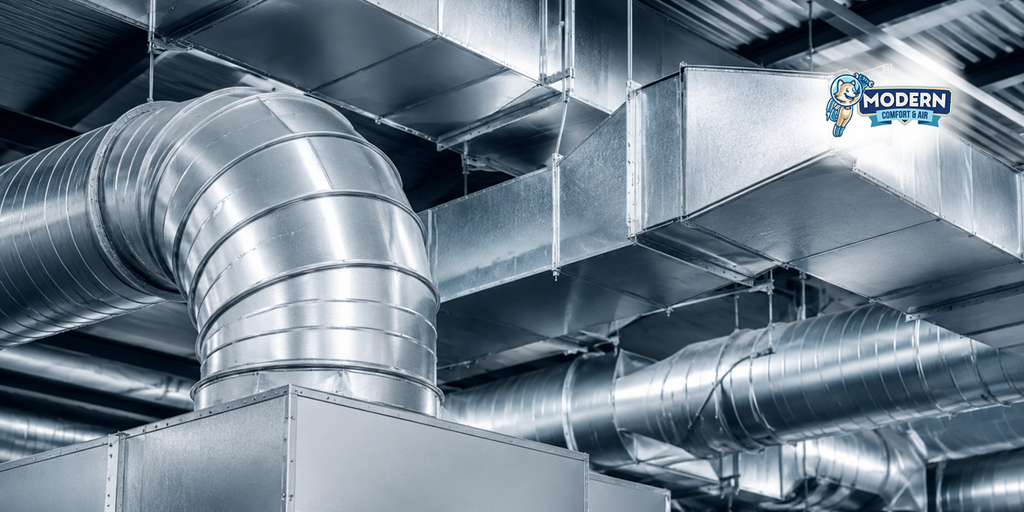
Your air ducts play a bigger role in home comfort and energy bills than most homeowners realize. When they’re damaged or poorly sealed, even a well-functioning HVAC system can struggle to keep your home comfortable.
Your air ducts do not need replacement simply because they are old. If the ductwork is properly sized, sealed, insulated, and in good condition, it may continue working for many years. The real question is whether the system has damage or performance problems that repairs cannot reasonably solve.
Here are the signs that replacement may be worth considering.
1. You Can See Major Damage
Crushed, torn, disconnected, or badly deteriorated ducts can restrict airflow and allow conditioned air to escape. Small leaks or loose connections can often be fixed, but extensive physical damage may call for air duct replacement.
Flexible ducts deserve particular attention. If they are severely kinked, collapsed, or damaged, airflow can suffer even when the HVAC equipment itself is working correctly.
2. Some Rooms Stay Too Hot or Too Cold
Persistent temperature differences can point to duct problems. A bedroom that stays warm while the rest of the house cools may have a disconnected duct, restricted airflow, poor insulation, or an undersized duct run.
However, uneven temperatures do not automatically mean you need new ducts. A professional should first determine whether the problem is actually in the duct system.
3. Your Energy Bills Keep Rising
Leaky or poorly insulated ducts can waste conditioned air, especially when they run through an attic, crawlspace, or garage. If your HVAC system runs normally but struggles to maintain comfort while energy costs increase, the ductwork deserves inspection.
Sealing leaks or improving insulation may solve the problem without full replacement.
4. There is Moisture or Visible Contamination
Water damage, persistent condensation, damaged insulation, or substantial contamination inside ducts should not be ignored. Moisture can damage duct materials and create conditions that support microbial growth.
In some cases, affected sections can be repaired. Severely damaged or inaccessible sections may require replacement.
Repair or Replace: Which is Right?
Air duct repair is often enough when the problem involves a few leaks, loose connections, minor insulation damage, or isolated sections. Ductwork replacement makes more sense when damage is widespread, the ducts are badly deteriorated, or the existing layout is fundamentally unsuitable for the HVAC system.
A proper inspection should look at the entire system, including supply and return ducts, insulation, connections, airflow, and accessible attic or crawlspace sections. Do not accept “your ducts are old” as the only reason for replacement.
If your ductwork is causing comfort or airflow problems, Modern Comfort and Air can inspect the system and help determine whether repair or replacement is the better option.
FAQs
1. How do I know if my air ducts need to be replaced or just repaired?
Repair works for isolated leaks or minor damage. Replacement is needed when damage is widespread or the layout no longer suits the system.
2. How long do air ducts typically last?
Sheet metal ducts can last 20-25+ years; flexible ducts wear out faster. Age alone isn’t a reason to replace them.
3. Can only part of my ductwork be replaced instead of the entire system?
Yes, damaged or affected sections can be replaced individually without redoing the whole system.
4. What are signs of mold or contamination in air ducts?
Musty odor, dark spots near vents, rising allergy symptoms, and moisture around ductwork are common signs.
5. Will replacing my air ducts lower my energy bills?
Yes, sealing leaks and replacing damaged ducts reduce wasted conditioned air and lower energy costs.
6. Do air ducts need to be replaced when installing a new HVAC system?
Not always – properly sized, damage-free ducts can often work with a new unit.
